




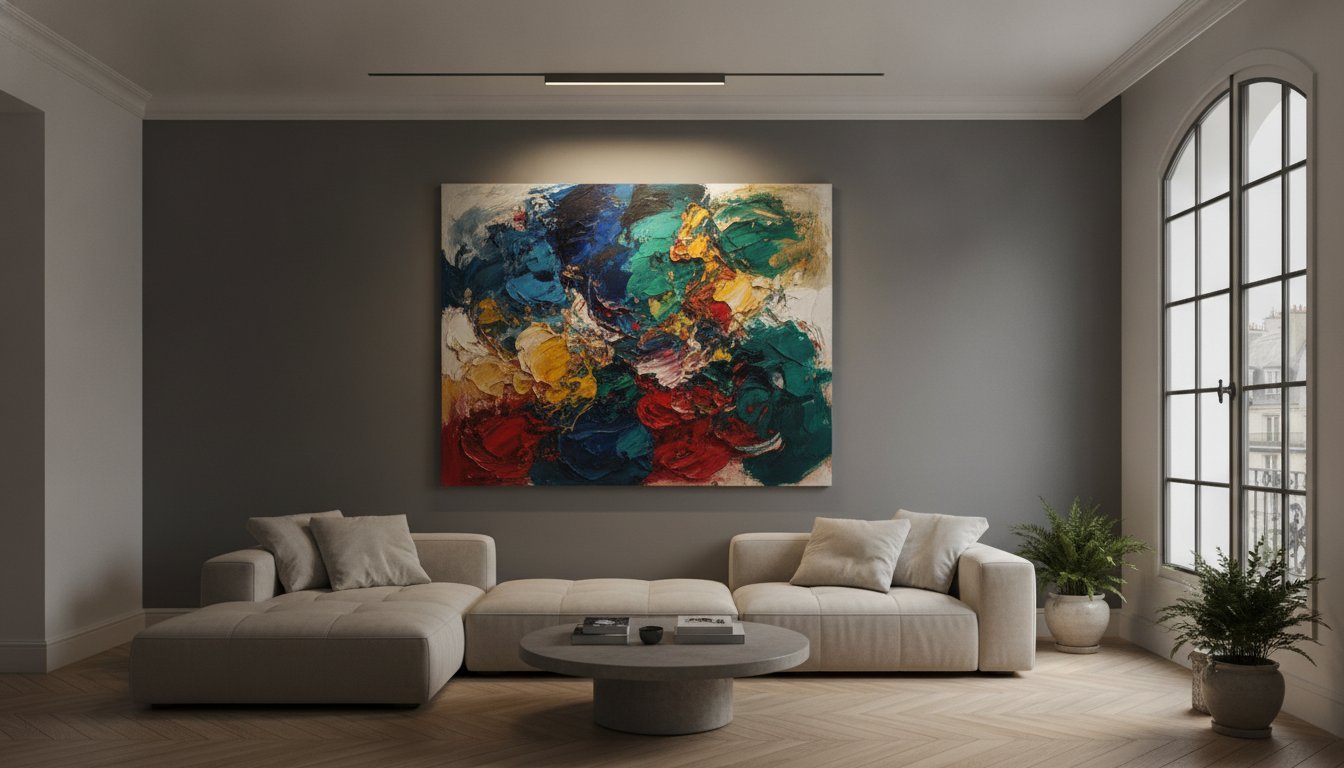
Can a work of art truly express its full depth without the light that brings it to life? You have probably already felt this frustration when faced with a distracting reflection on the glass or a color nuance that seems to fade once the frame is hung on the wall. It is understandable to worry that a poor technical choice might alter the quality of the pigments or create a cold atmosphere, far from the initial emotion you were seeking.
This guide will help you choose the lighting to highlight a painting with the precision of a curator. Learn to enhance your favorite pieces thanks to our expert advice on angles of incidence and LED technologies that are gentle on the materials. Together, we will explore installation solutions to create a harmonious personal gallery, where each light source highlights the authenticity of your works while creating a warm and distinctive atmosphere in your home.
Key Takeaways
- Protect your works from UV rays and heat while revealing the depth of the details through a carefully planned technical installation.
- Select the ideal Color Rendering Index (CRI) to ensure an accurate reproduction of every color nuance.
- Identify the lighting to highlight a painting that is best suited to your artwork, whether it is an oil painting or a photographic print.
- Create a cohesive atmosphere by matching the style of your wall lights or lamps with the materials and period of your frames.
Understanding the challenges of lighting for your paintings
Lighting is not just a functional necessity. It is the final creative touch that brings a work to life. History teaches us the importance of light in art, as it has the power to reveal invisible textures or alter the perception of volume. The installation of lighting to highlight a painting must meet aesthetic and conservation criteria so as not to isolate the object from its immediate surroundings.
Preserving the longevity of a canvas requires absolute technical rigor. UV rays and the heat emitted by unsuitable light sources are direct enemies of pigments. Modern LED technology offers a safe solution. It eliminates the risk of fading while limiting distracting reflections on framed works under glass. This technical precision prevents glare, a common flaw that makes it difficult to appreciate the finesse of the brushwork or the richness of a photographic print.
Different lighting solutions for paintings
The choice of lighting to highlight a painting depends on the desired display. A wall light remains a reliable choice for targeted, elegant illumination above the frame. For those who prefer flexibility, adjustable spotlights allow you to direct the beam at several works according to your preferences. Finally, a table lamp offers a poetic alternative. Placed on a console, a Roxanne or Andy lamp delicately illuminates a simply displayed work, creating a warm and intimate atmosphere.
The criteria for choosing the ideal lighting
The Color Rendering Index (CRI) is the most vital technical criterion when choosing lighting to highlight a painting. A CRI higher than 90 ensures that reds remain deep and blues vibrant, faithfully respecting the artist's intention. Without this precision, color nuances become flat and lose their natural brilliance.
Adapt the color temperature to the displayed artwork. A warm white, between 2700K and 3000K, enhances classic oil paintings. In contrast, a neutral white of 4000K reveals the purity of contemporary photographs or black-and-white works. As for power, avoid over-saturating the artwork. A few hundred lumens are often sufficient for lighting to highlight a painting without distorting its contrasts. Check the beam angle. A beam that is too narrow creates an unsightly hot spot, while a beam that is too wide dilutes the accentuating effect.
Installation and positioning: the golden rules
Position your light source carefully. An angle of incidence of 30 degrees from the vertical is ideal. It reduces the shadows cast by the frame and limits direct reflections. For large works, calculate the distance so that the center is bathed in light. For a polished integration, the elegant creations of Elements Lighting offer solutions where the finesse of the design takes a backseat to the beauty of the artwork. Finally, consider the discretion of the cables. Painted cable trunking or battery-powered wall lights allow you to maintain the clean lines of your private gallery.

Integrating painting lighting into a refined interior
The harmony between the frame and the light source defines the character of a room. Lighting to highlight a painting should not only illuminate; it must engage in a dialogue with the artwork. For a classic canvas with a gold frame, opt for brass or patinated finishes that echo the object's history. Conversely, a minimalist contemporary work pairs well with clean lines and matte materials. This visual consistency creates a fluid journey where the eye moves from one room to another, guided by expertly balanced plays of intensity.
Consider your lighting fixtures as works of art in their own right. Even when turned off, a well-chosen design piece structures the space with its silhouette and material. The nobility of materials, such as handcrafted blown glass, brings a sculptural presence that complements the narrative of your walls without ever competing with it. It is in this detail that lies the secret of an inhabited and warm personal gallery.
Handcrafted design at the service of art
Choosing a wall light in blown glass, such as those in the Grace collection, allows you to introduce an organic texture. The subtle irregularities of the glass create a soft diffusion, ideal for sensitive works. For pieces displayed on a sideboard or console, using designer table lamps such as the Roxanne or Andy models transforms the display into a true cabinet of curiosities. This more intimate approach allows you to play with shadows and reflections, offering a presentation that evolves throughout the day. Lighting to highlight a painting then becomes the link between your furniture and your art collection.
Towards an artistic presentation of your interiors
The lighting of a work of art is a subtle balance between technical respect and aesthetic intention. By prioritizing a high CRI and precise positioning, you ensure color fidelity and the long-term preservation of your canvases. The choice of lighting to highlight a painting then becomes an expression of your own collector's eye. Whether it is a sculptural blown-glass wall light or a table lamp with a clean design, each light source contributes to the creation of an intimate atmosphere.
Our creations, born from original French design and handcrafted expertise, are designed to complement your finest pieces. Enjoy careful national shipping to bring your private gallery project to life. Discover our lighting collections to enhance your walls and let the light elegantly reveal the soul of your works.
Frequently Asked Questions
What CRI should I choose to light a valuable painting?
A CRI (Color Rendering Index) higher than 90 is essential for valuable works. This technical precision ensures that the pigments retain their original brilliance under artificial light. Choosing lighting to highlight a painting with a high CRI allows you to scrupulously respect the artist's color palette without distorting the contrasts essential to interpreting the work.
How can I avoid reflections on a painting with glass?
To eliminate distracting reflections on glass, adjust the angle of incidence of the light to approximately 30 degrees from the vertical. This tilt directs the light reflections toward the floor rather than into the viewer's eye. The use of museum-quality anti-reflective glass, combined with diffused lighting, ensures perfect visibility of the details without distracting mirror effects.
What is the ideal distance between the light source and the painting?
The ideal distance is calculated based on the dimensions of the artwork and the beam spread. As a general rule, place your lighting to highlight a painting at a horizontal distance equal to half the height of the frame. This distance allows for even coverage of the pictorial surface while preventing the formation of overly pronounced shadows at the top of the canvas.
Can I use Message In The Bulb LED bulbs to light artwork?
Message In The Bulb (MITB) bulbs are ideal for creating a narrative display around a work. Thanks to their LED filaments forming words, messages, or graphic patterns inside the bulb, they bring a unique poetic dimension. Although they do not replace technical accent lighting, they perfectly complement an installation by creating a warm and creative atmosphere.


Share:
Luxury Lighting: Trends and Secrets of Exceptional Lighting in 2026
Designer living room wall light: the art of sculpting light in 2026